
Why Employees Don’t Use Their PTO (And Why It Matters)
Employees leave PTO unused despite burnout. Learn the real reasons time off fails to restore performance—and why recovery requires more than policy.
BLOG 1
Mike - Serenity Breeze
2/1/20264 min read
Workforce studies consistently show that a large portion of employees leave PTO unused each year. This pattern appears across industries, income levels, and work environments — including organizations with strong stated commitments to well-being.
What makes this particularly striking is that unused PTO persists even when:
• Employees report high levels of stress and burnout
• Organizations actively encourage time away
• Vacation balances are transparent and readily accessible
This disconnect suggests a fundamental truth: time off alone does not guarantee rest.
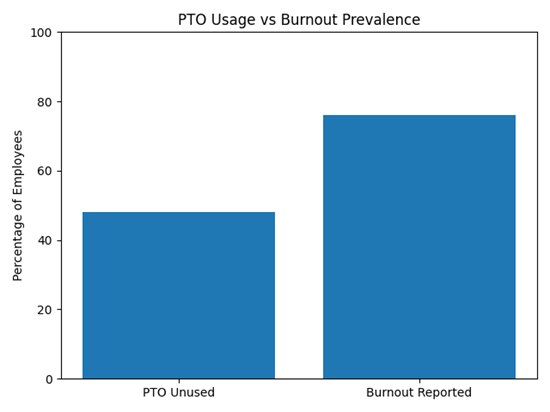
48% of U.S. employees leave at least some PTO unused each year
76% report experiencing burnout at least sometimes
Sources: SHRM; Gallup; U.S. Travel Association
The Scope of the Problem
The Real Barriers Preventing Employees from Using PTO
1. Financial Insecurity — The Primary Obstacle
Paid time off provides time, but it does not provide financial readiness.
Across numerous surveys, cost consistently emerges as the top reason employees avoid vacations. Rising expenses related to housing, healthcare, childcare, and general cost of living leave many households reluctant to spend on travel, even when time is technically available.
For many employees:
• Vacations compete with emergency savings
• Travel is viewed as discretionary or irresponsible
• PTO becomes time spent at home handling life logistics rather than recovering
In these circumstances, time off becomes absence from work, not restoration from stress.
65% of employees who skipped vacations cite cost as the primary barrier
Financial stress is strongly correlated with burnout and reduced cognitive focus
Sources: U.S. Travel Association; American Psychological Association
2. Cognitive Load and Planning Fatigue
Modern travel planning has become cognitively demanding.
Budget uncertainty, fluctuating prices, and an overwhelming number of choices create friction long before a trip ever begins. For already overextended employees, the mental effort required to plan a vacation can feel like additional work rather than relief.
As a result, many defer taking PTO indefinitely, waiting for a less stressful season that rarely arrives.
3. Workplace Culture and Implicit Pressure
Organizational culture plays a subtle but powerful role in PTO usage.
Even in companies that publicly support time off, employees often observe:
• Lean staffing models that make coverage feel burdensome
• Leaders who rarely disconnect themselves
• Performance norms that reward constant availability
These unspoken signals condition employees to ration their PTO, reserving it for emergencies rather than proactive recovery.
Employees are significantly less likely to take PTO when leaders do not model time away
Source: Gallup Workplace Analytics
4. The Myth of the Restful Staycation
When employees take time off without meaningful separation from their environment, recovery is often limited.
Staycations frequently involve:
• Ongoing monitoring of work communications
• Household responsibilities and caregiving
• Little psychological distance from daily stressors
Research on stress recovery shows that true rest requires psychological detachment. Without it, the body’s stress response remains elevated, and the benefits of time off diminish significantly.
The Hidden Organizational Cost of Unused PTO
Unused PTO is often perceived as neutral — or even advantageous — from an employer’s perspective. If employees don’t take time off, work continues uninterrupted.
In practice, unused PTO carries both financial and productivity costs, even when those costs remain invisible.
From a financial standpoint:
• Accrued PTO represents a real liability in many organizations
• Large balances can create cash exposure during layoffs, retirements, or restructuring
• In some jurisdictions, unused PTO must be paid out, amplifying risk
From a productivity standpoint:
• Employees delaying rest experience cognitive fatigue and reduced decision quality
• Burnout increases error rates, rework, and disengagement
• Stress spreads informally across teams as colleagues compensate for diminished capacity
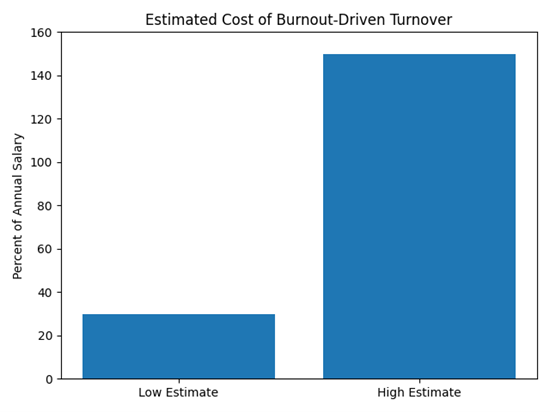
Perhaps most critically, employees who postpone recovery long enough are more likely to exit entirely — transforming hidden burnout into costly turnover.
Ironically, organizations may pay more for unused PTO than for time off that is taken intentionally and supported well.
Reframing the Question
The issue is not whether employees value time off.
The more important question is: What conditions must exist for time off to actually become restorative?
The answer lies at the intersection of:
• Financial readiness
• Reduced planning friction
• Cultural permission to disconnect
• Structural support for recovery
Until these elements align, unused PTO will remain a symptom of a deeper design challenge — not a matter of individual choice.
Looking Ahead
Where Wellness Meets Infrastructure
Sources
Forward-thinking organizations are beginning to recognize that rest is not a personal discipline issue, but a systems problem.
When employees are supported not only with time, but with the means and permission to use that time meaningfully, the impact extends beyond individual well-being. It shapes engagement, retention, and organizational resilience.
As organizations look more closely at why PTO goes unused, a consistent pattern emerges: time off alone does not guarantee recovery.
For rest to actually occur, employees need systems that make time away financially feasible, easier to plan, and culturally supported.
Serenity Breeze Travel was designed as a wellness benefit that builds this infrastructure—helping organizations translate PTO policies into real, restorative outcomes employees can actually use.
Gallup – State of the Global Workplace
Society for Human Resource Management (SHRM) – Employee Benefits Survey
American Psychological Association – Stress in America
U.S. Travel Association – Paid Time Off Trends
Harvard Business Review – Burnout and Organizational Performance
For years, organizations have focused on expanding paid time off as a solution to burnout. Yet despite more generous PTO policies, unlimited vacation plans, and increased emphasis on employee wellness, a surprising number of employees continue to leave significant amounts of time unused.
At first glance, the explanation seems simple: employees are choosing not to take time off.
The reality, however, is far more complex — and far more systemic.