Your Journey to Serenity Starts Here

Why PTO Alone Fails: Burnout, Recovery & Financial Readiness
Paid time off (PTO) alone often fails to reduce burnout. In practice, it is only one variable in a much larger equation. Learn why PTO without financial and planning infrastructure rarely leads to real recovery.
BLOG 2
Mike - Serenity Breeze
2/8/20262 min read
Across workforce and behavioral studies, cost consistently ranks as the primary reason employees do not take vacations, even when PTO is available (SHRM; APA; U.S. Travel Association).
Rising expenses related to housing, healthcare, childcare, and general cost of living leave many households reluctant to spend on travel.
For many employees:
• Vacations compete with emergency savings
• Travel is viewed as financially irresponsible
• PTO becomes time spent managing life logistics rather than recovering
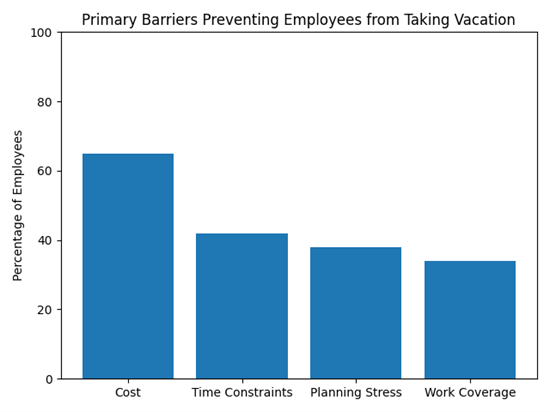
65% of employees who skipped vacations cited cost as the primary barrier. Financial stress is strongly correlated with burnout, absenteeism, and reduced focus
Sources: U.S. Travel Association; APA, Stress in America
The Financial Reality Behind Unused PTO
Why Financial Wellness and Rest Are Inseparable
Financial stress is one of the strongest predictors of burnout. Employees carrying persistent financial anxiety experience:
• Reduced cognitive bandwidth
• Higher absenteeism
• Greater likelihood of deferring recovery behaviors, including vacations
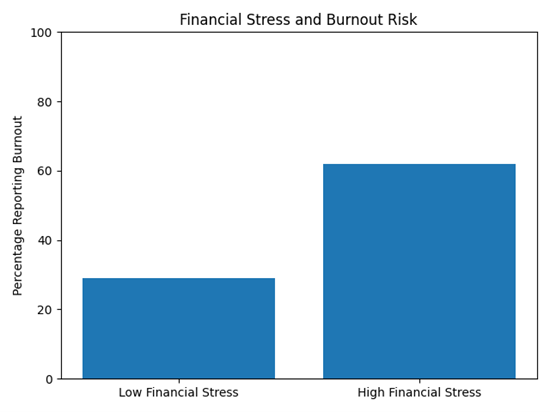
Employees experiencing high financial stress are more than twice as likely to report burnout symptoms
Sources: Gallup; American Psychological Association
Vacation Savings Accounts address this gap by creating dedicated financial infrastructure for time off.
Key characteristics include:
• Automatic payroll contributions, reducing reliance on willpower
• Clear separation from general spending funds
• Optional employer contributions with predictable cost structures
This mirrors the success of healthcare savings accounts and retirement plans, which transformed outcomes not by increasing benefits, but by designing systems that make participation frictionless (HBR; SHRM).
For employers, Vacation Savings Accounts are not about subsidizing luxury travel. They are about:
• Increasing the likelihood that PTO is actually used
• Supporting recovery without introducing unpredictable expenses
• Reducing burnout-driven disengagement and turnover risk
When time off is financially viable, it is more likely to occur—and more likely to deliver its intended benefit.
Why Employers Are Paying Attention
Financial stress is one of the most overlooked barriers to recovery. Without dedicated systems that support saving and planning, even generous PTO policies fall short.
Wellness benefits that succeed tend to share one trait: they reduce friction rather than relying on employee willpower.
Serenity Breeze Travel addresses this gap by providing financial and planning infrastructure that makes restorative time off achievable—not aspirational.
Sources
Gallup – State of the Global Workplace
Society for Human Resource Management (SHRM) – Employee Benefits Survey
American Psychological Association – Stress in America
U.S. Travel Association – Paid Time Off Trends
Harvard Business Review – Burnout and Organizational Performance
Time off without financial readiness frequently results in postponed vacations, shortened breaks, or PTO that is spent managing personal obligations rather than recovering. This gap between available time and usable time explains why so many well-intentioned PTO policies underperform.
Why Time Off Fails Without Financial Infrastructure
In this context, PTO becomes theoretical rather than functional.
Cost is the most frequently cited barrier preventing employees from taking vacations, outranking time constraints, planning stress, and work coverage concerns (U.S. Travel Association; SHRM; APA).
Without a mechanism to pre-allocate and protect funds for rest, PTO remains aspirational.
Employees experiencing high financial stress report burnout at more than twice the rate of those with low financial stress, reinforcing the link between financial readiness and recovery capacity (Gallup; APA).